🎧 Listen to this article
In short: Holding space for what wants to leave means creating intentional pauses where we acknowledge endings without clinging, honor our emotions without drowning in them, and trust that release creates room for what truly belongs in our lives.
Since Ancient Philosophies Taught Us to Honor Cycles
Since the Stoics reminded us that resistance magnifies suffering, we’ve known that fighting natural endings only prolongs pain. They understood what many of us forget in 2026: some chapters close not because we failed, but because their purpose has been fulfilled.
You’ve likely felt it—that quiet knowing that a relationship, habit, or version of yourself no longer fits. The discomfort isn’t in the ending itself but in our refusal to witness it with honesty.
In July 2026, as we navigate a culture obsessed with constant growth and addition, the practice of conscious release becomes radical. It asks us to value emptiness, to see letting go not as loss but as curation of our inner landscape.
Why We Resist What’s Already Gone
We cling to the familiar because uncertainty feels like freefall. Your mind constructs elaborate stories about who you’d be without this person, this role, this protective shell you’ve worn for years.
But resistance creates a peculiar suffering—the exhaustion of holding onto something that’s already left in essence, even if the form remains. You become a curator of ghosts, preserving what once lived but no longer breathes.
The practice begins when you notice this tension: the gap between what is and what you’re pretending still exists.
Creating a Container: Physical Space as Mirror for Emotional Work
Before addressing what wants to leave, establish where you’ll meet it. This isn’t about aesthetics but about intentionality—a clear signal to your nervous system that what follows matters.
Choose a room or corner where you feel neither exposed nor hidden. The space should hold you without judgment, like a trusted witness who won’t try to fix or rush your process.
The Elements of a Practice Space
Simplicity serves release better than ornamentation. A chair that supports your back. A small table at arm’s reach. Perhaps a candle whose flame reminds you that everything burns and transforms.
You might include a journal and pen, not to perform or produce, but to give your thoughts somewhere to land besides the endless loop of rumination. Some find comfort in a single photograph or object that represents wholeness rather than the specific thing they’re releasing.
In 2026, resist the urge to curate this space for documentation. This practice lives in privacy, in the sacred boredom of simply being present to what is.
The Three-Part Movement: Acknowledgment, Appreciation, Release
Conscious release follows a natural rhythm, though the timeline belongs entirely to you. These aren’t rigid steps but invitations to depth.
Acknowledgment: Naming What Is
Begin by stating the truth aloud, even if your voice shakes. « This friendship has changed. » « I no longer believe what I once did. » « This version of me feels outgrown. »
Your body knows before your mind admits. You might notice tension in your chest, a heaviness in your throat—physical signatures of truth withheld. Speaking it breaks the spell of pretending.
Write if speaking feels too raw. The page receives everything without recoil.
Appreciation: What This Brought You
Before releasing, honor what this relationship, belief, or identity provided. Even painful chapters teach us—about our boundaries, our capacity, what we’ll no longer accept.
You might write a letter you’ll never send, cataloging not just wounds but gifts: « You taught me I could survive disappointment. » « This job showed me what I don’t want. » « This version of me got me here. »
Appreciation doesn’t mean condoning harm. It means refusing to reduce complex experiences to simple narratives of good or bad.
Release: Letting the Form Dissolve
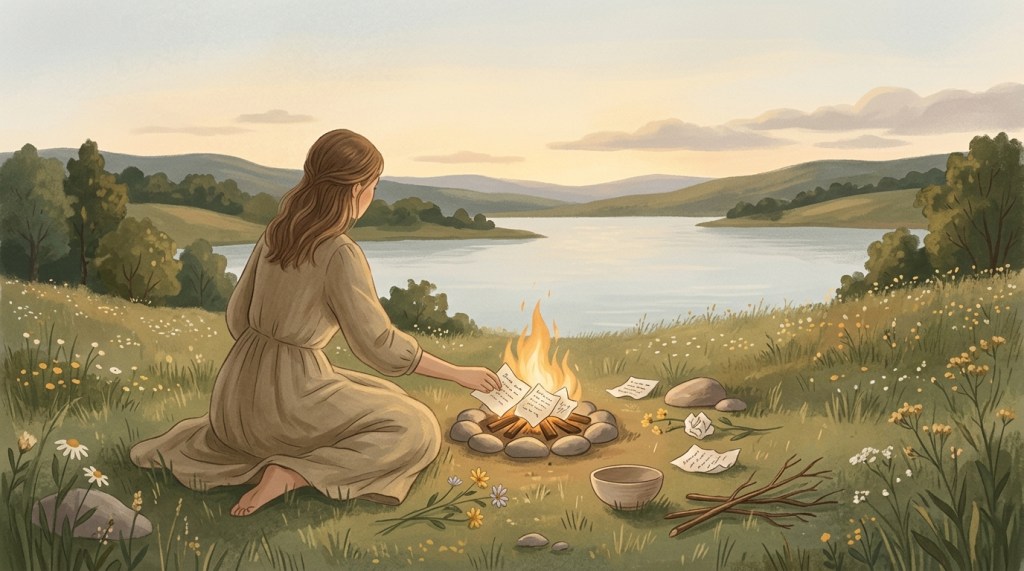
Release happens in layers, not once. You might write what you’re letting go on paper and burn it safely, watching smoke carry words skyward. Or speak a formal goodbye to an empty chair, giving voice to what you’ve held silent.
Some choose symbolic gestures—returning objects, deleting digital traces, changing physical spaces. Others release purely internally, a shift in how they hold the memory rather than erasing evidence it existed.
In July 2026, remember: release doesn’t mean forgetting. It means loosening your grip on how things should have been, making peace with how they were.
Gratitude as Grounding: What Remains When We Stop Clinging
As you practice release, anchor yourself in what endures. Gratitude here isn’t toxic positivity but recognition of your own continuity beneath changing circumstances.
You remain. Your capacity for presence remains. The part of you that can witness endings without being destroyed by them—that remains.
Gratitude for Your Own Resilience
After acknowledging what’s leaving, turn attention to what you’ve carried forward despite loss. The friendships that deepened. The mornings you got up anyway. The moments you chose honesty over comfort.
Write three truths that haven’t changed, even as so much has: « I still value integrity. » « I can still find beauty in small things. » « I’m still learning. »
This isn’t about silver linings but about refusing to let endings eclipse your whole story.
Gratitude for Empty Space
The gap left by release feels vulnerable at first, like a room suddenly too quiet. But emptiness is also potential—room for what you haven’t yet imagined.
You don’t need to fill it immediately. Practice sitting with the spaciousness, noticing how it feels to carry less. Some discover that the weight they’ve been hauling wasn’t theirs to begin with.
In 2026, as algorithms push constant consumption and connection, empty space becomes precious. Guard it.
Integration: Carrying Release Into Daily Rhythm
A single session of intentional release opens a door, but the practice lives in how you move through ordinary days afterward. Integration means honoring endings not just ceremonially but practically.
Noticing Without Re-Grasping
In the days following release, you’ll likely reach for what you’ve let go—checking their messages, revisiting old patterns, questioning your decision. This isn’t failure but habit.
When you notice yourself reaching, pause. Place one hand on your chest. Breathe. Remind yourself why you created space. Then consciously choose something else—a walk, a call to someone who sees you clearly, five minutes of simply staring out a window.
Each time you notice and redirect, you strengthen new neural pathways. The reaching lessens.
Creating New Rituals in the Space Left Behind
What will you do with the time, energy, or mental space you’ve reclaimed? This isn’t about productivity but about intentional living.
If you released a draining relationship, perhaps you use that time for longer walks alone. If you let go of a belief about who you should be, maybe you experiment with who you actually are when no one’s watching.
In July 2026, consider one small ritual that honors your commitment to living more honestly: morning pages, weekly solitude, monthly check-ins with yourself about what still fits and what’s ready to shift.
When Release Feels Like Betrayal: Staying Present to Complexity
Sometimes what wants to leave is something or someone you once promised to keep forever. The guilt can feel crushing—as though honoring your truth means violating your integrity.
But staying in relationships or identities you’ve outgrown out of obligation serves no one. You become a hollow version of yourself, present in form but absent in essence.
Distinguishing Commitment from Imprisonment
Commitment adapts to new information. Imprisonment demands you ignore what you’ve learned. If you’ve discovered that a relationship requires you to betray yourself repeatedly, honoring that truth isn’t cruelty—it’s self-preservation.
You can grieve who you thought you’d be while still choosing who you’re becoming. Both can be true.
Forgiving Yourself for Changing
You’re allowed to outgrow what once fit perfectly. You’re allowed to change your mind, to realize you were wrong, to discover that what you needed at twenty doesn’t serve you at thirty or forty or seventy.
Write yourself permission: « I forgive myself for evolving beyond what I once promised. » Say it until the words stop catching in your throat.
In 2026, as we’re sold stories of consistent personal brands and unchanging identity, give yourself permission to be human—which means fluid, learning, occasionally contradictory.
Key takeaways
- Conscious release creates intentional space by acknowledging endings honestly, appreciating what they taught us, and physically or symbolically letting go of what no longer serves our authentic path.
- Creating a simple, private practice space signals to your nervous system that the work of releasing deserves witnessing without performance or documentation.
- Gratitude during release isn’t about forced positivity but about recognizing your continuity and resilience beneath changing circumstances, anchoring you as external forms dissolve.
- Integration happens daily through noticing when you reach for what you’ve released, pausing without judgment, and consciously redirecting toward choices that honor your decision.
- Releasing commitments that no longer fit isn’t betrayal but an act of integrity when staying requires you to abandon your evolving truth and authentic self.
- Forgiving yourself for changing acknowledges that growth often means outgrowing previous versions of yourself, and this evolution is part of being fully human rather than a character flaw.
FAQ
How do I know if something truly wants to leave or if I’m just avoiding difficulty?
Something genuinely ready to leave feels like relief beneath the grief, while avoidance feels like escape from growth. If letting go allows you to show up more authentically elsewhere and the resistance comes mainly from fear of others’ judgment rather than loss of genuine connection, it’s likely a natural ending. Avoidance, conversely, leaves you feeling hollow rather than spacious, and often involves running toward distraction rather than consciously choosing release.
What if I feel nothing during a release practice?
Numbness is often protection—your system’s way of pacing emotional processing so you’re not overwhelmed. Feeling nothing doesn’t mean the practice failed; it means your nervous system needs safety before accessing deeper layers. Continue showing up to the practice without forcing emotion, and consider whether you need more grounding (physical movement, time in nature) before attempting release work.
How often should I practice intentional release?
Release isn’t a scheduled ritual but a responsive practice—you engage it when you notice persistent discomfort from holding what wants to leave. For some, this happens monthly during natural reflection points; for others, less frequently. Trust your inner knowing rather than external prescriptions, and remember that one deep, honest release serves you better than frequent superficial performances of letting go.
Can I practice release for someone else’s behavior or choices?
You can only release your attachment to controlling others, not release them from their own journey. The practice focuses on letting go of expectations, judgments, or the story that their choices define your worth. Write what you wish they would change, then burn it—not to change them but to free yourself from the exhausting work of trying to.
What do I do with the empty space after releasing?
Initially, do nothing—simply practice being with spaciousness without rushing to fill it. After some weeks, notice what naturally emerges in the gap: new interests, deeper existing relationships, or simply more presence to your own life. The space itself is valuable; it doesn’t require justification through immediate productivity or replacement connections.
Is it normal to grieve what I chose to release?
Grief after intentional release is not only normal but evidence of your humanity—it means what you let go mattered, even if it no longer served you. You can simultaneously know you made the right choice and mourn what was lost, holding both truths without contradiction. Allow the grief its season without interpreting it as regret or second-guessing your decision.
Read also
- When Longing Becomes Language: Rediscovering Desire Through Slowness, Silence, and Sacred Attention
- Evening Stillness Practice: Releasing the Day’s Weight, Honoring What Remains, and Meeting Yourself in the Quiet
- Evening Solitude Practice: Reclaiming Inner Silence, Deepening Self-Knowledge and Rediscovering Authentic Presence
 Synchronicity